




Awolowo’s Progressivism and the Crisis of Contemporary Progressive Politics in Nigeria || Timilehin Kolade
The term “progressive” has become one of the most frequently invoked expressions in Nigerian politics. Political parties, elected officials, and political movements routinely describe themselves as progressives, often presenting the label as proof of their commitment to development, good governance, and the welfare of the people. Yet, despite its widespread use, the concept has increasingly lost its ideological clarity. What was once a distinct political philosophy rooted in social transformation has, in many instances, become a political identity that means different things to different people. This contradiction lies at the heart of what can be described as the crisis of contemporary progressive politics in Nigeria.
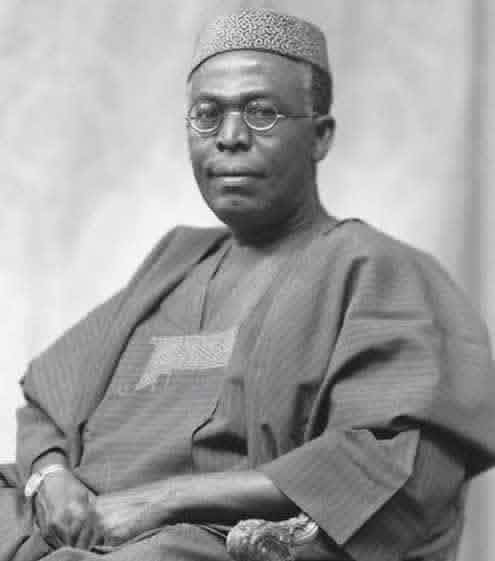
To understand this crisis, it is necessary to return to the political philosophy of Chief Obafemi Awolowo, the undisputed architect of progressive politics in Nigeria. Awolowo viewed politics not merely as a contest for power but as a tool for societal advancement. His conception of governance was built around the belief that the state had a responsibility to improve the welfare of the people through deliberate investments in education, healthcare, economic empowerment, and social development. For Awolowo, the legitimacy of government was measured by its ability to expand opportunities and improve the quality of life of ordinary citizens.
His introduction of free primary education in the Western Region remains one of the most enduring examples of progressive governance in Nigeria’s history. The policy was not simply an educational programme; it reflected a broader conviction that human capital development was the foundation of societal progress. Awolowo believed that government existed to empower citizens and that development was ultimately about people rather than projects.
This philosophy influenced a generation of political leaders who became standard-bearers of the progressive tradition. Figures such as Bola Ige, Lateef Jakande, Ambrose Alli, Bisi Onabanjo, and Anthony Enahoro carried forward the ideals of the Awolowo school in different capacities. They may have differed in style and political circumstances, but they shared a common commitment to people-centred governance.
Jakande became renowned for his mass housing schemes and educational programmes in Lagos. Ambrose Alli pursued free education and rural development in Bendel State. Bola Ige sought to deepen the progressive tradition in Oyo State through policies aimed at improving social welfare and public infrastructure. Bisi Onabanjo championed educational advancement and institutional development in Ogun State, while Anthony Enahoro remained a lifelong advocate of democratic governance, social justice, and constitutional reform. Whether one agreed with every policy they implemented is beside the point. What distinguished them was their ideological clarity and their conviction that politics should serve a higher purpose than the acquisition of power.
For this generation, progressivism was not a campaign slogan. It was a philosophy of governance. Their political identity was inseparable from their beliefs. They understood politics as a means of uplifting society, reducing inequality, and creating opportunities for future generations. Their legacy demonstrates that progressivism was once defined by ideas, principles, and measurable commitments to human development.
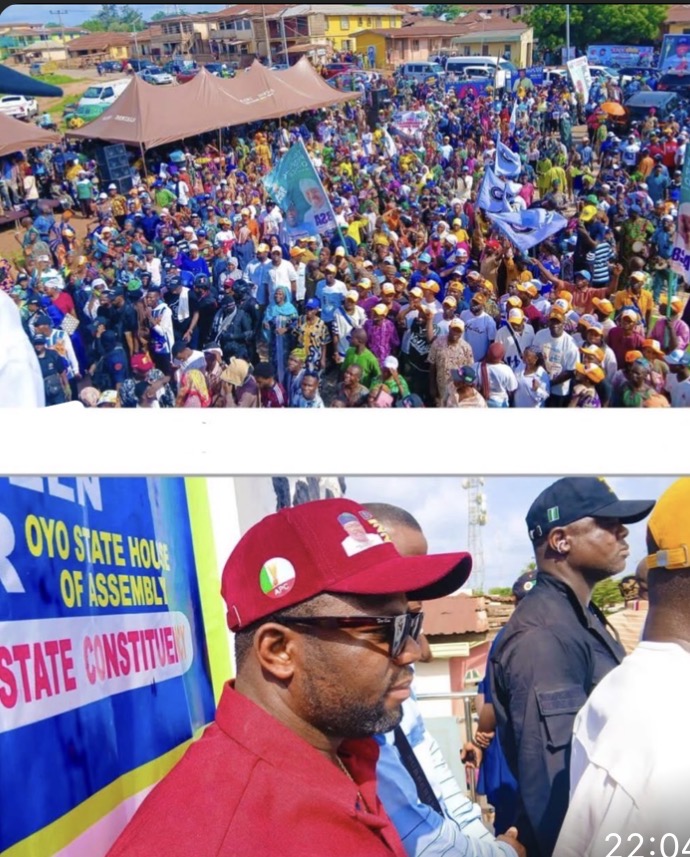
The contrast with contemporary political practice is difficult to ignore. Today, many politicians proudly claim the progressive label, yet the ideological foundations that once defined progressivism have become increasingly blurred. Political defections occur with remarkable frequency, often without any corresponding shift in political philosophy. Politicians who fiercely criticize a political platform one day may join it the next, not because their convictions have changed but because political calculations have changed.
This phenomenon highlights one of the greatest crises confronting contemporary progressive politics in Nigeria: the decline of ideology. The progressives of old were defined by what they believed. Many present-day progressives are often defined by where they stand politically at a particular moment. For Awolowo and his ideological descendants, political affiliation was an expression of conviction. For many contemporary actors, party affiliation appears increasingly driven by expediency.
The result is that progressivism has become more of a political brand than a political philosophy. Political actors invoke the legacy of Awolowo and the progressive movement while operating within a political culture that often prioritizes elite competition, factional struggles, and electoral victories over ideological consistency. The language of progressivism remains, but its substance is frequently absent. This widening gap between principle and practice represents the core crisis of contemporary progressive politics in Nigeria.
Another significant departure from the original progressive tradition is the contemporary understanding of development. Awolowo and his political heirs placed human development at the centre of governance. Education, healthcare, social welfare, and economic opportunity were viewed as essential pillars of progress. Today, development is often measured primarily through physical infrastructure. Roads, bridges, and public buildings are undoubtedly important, but they do not, by themselves, define progressivism. A government may construct impressive infrastructure while neglecting the educational, healthcare, and economic needs of its citizens. Such an approach would have been incomplete within the Awolowo conception of development.
The crisis of progressive politics in Nigeria is therefore not the absence of self-proclaimed progressives. Rather, it is the growing disconnect between the ideals that once defined progressivism and the manner in which the label is used today. Genuine progressivism requires more than electoral success or partisan affiliation. It demands a commitment to social justice, human development, economic inclusion, and accountable governance. It requires leaders who see public office as an opportunity to transform lives rather than merely occupy positions.
The enduring relevance of Awolowo, Bola Ige, Lateef Jakande, Ambrose Alli, Bisi Onabanjo, and Anthony Enahoro lies not simply in the offices they occupied but in the principles they represented. Their legacy serves as a reminder that progressivism is not measured by political rhetoric or party nomenclature. It is measured by the extent to which governance improves the lives of ordinary people and expands opportunities for future generations.
As Nigeria confronts the challenges of the twenty-first century, there is an urgent need to recover the ideological essence of progressive politics. The task before contemporary political actors is not merely to invoke the names of the pioneers of the progressive movement but to emulate their commitment to principled governance. The real challenge is not whether politicians can call themselves progressives, but whether they can govern according to the ideals that historically defined progressive politics in Nigeria.
Until progressivism once again becomes a philosophy of service rather than a label of convenience, the gulf between Awolowo’s progressivism and contemporary progressive politics will remain one of the defining contradictions of Nigeria’s democratic experience.