



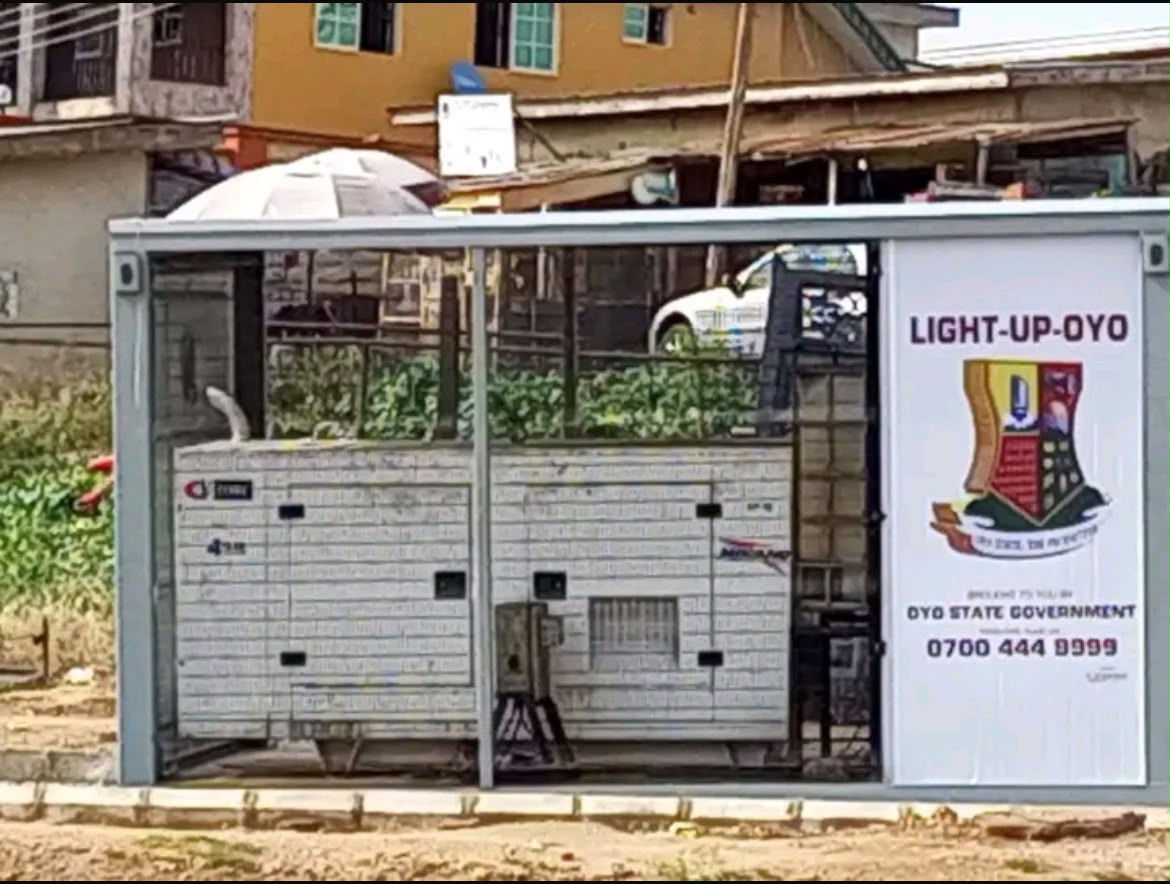
Is it solar Light that people will eat? | Minkail Olaitan

I came back to Ogbomoso not long ago and we drove the inner streets between Bowen and Seminary. A corridor I remember as dark after dusk is now a working street: shops open later, people moving with less guesswork, the road itself easier to read.
That short drive is why I am writing. In town, a familiar complaint is already in circulation: lighting is a distraction. People must eat. Solar cannot be served on a plate. Why, then, should a constituency clap for lamps?
It is a serious question. It is also a smaller question than it sounds.
Nobody eats a streetlight. That is not in dispute. What the complaint refuses to hold is the rest of the evening. A stall that can stay open after sunset is a food argument. A student who can walk a known road is a food argument, because a household that loses someone to the dark does not debate menus. A market that is no longer a corridor of guesswork is a local economy, not a decoration.
I thought, on that same drive, of stretches in Oriire and of other poorly lit pockets even inside the town — places where the absence of light does not feel poetic. I will not dress those streets in language I cannot evidence from the passenger seat. I will say only what the night itself says: darkness shrinks a town. It shortens trade. It makes the timid stay indoors and the reckless own the hour.
There is a political habit that follows from that shrinkage. When public goods arrive slowly, people are taught to treat the next concrete thing as an insult. Food is set against water, water against roads, roads against light, as if a community were allowed only one necessity at a time. The result is not toughness. It is a constituency trained to police its own progress.
Honourable Olamijuwonlo Alao-Akala, who represents Ogbomoso North, Ogbomoso South and Oriire, has made lighting and the roads that lighting serves part of his public work — including attention to the Caretaker/Seminary axis and solar lighting in communities that previously went dark early. That record can be checked, dated and argued with. It should not be waved away as “goodies”. A lamp that still works in the twelfth month is infrastructure. A bag of rice is a bag of rice. Both may have a place. They are not the same place.
Ogbomoso’s reputation, from long before this argument, is for people who work with their hands and their heads. Reducing that reputation to a begging bowl is not solidarity with the hungry. It is a demotion. The industrious do not stop needing supper because a street is lit. They need supper and a street on which supper can still be sold at eight o’clock.
Noam Chomsky’s point about manufactured consent is useful here only if it is not stretched. Consent is often organised around a narrow story of what the public is permitted to want. In a resuscitating economy as ours, that story is easy to write: everything that is not food is vanity. The story is powerful because hunger has been capitalised on by political tricksters. Hence, It becomes dishonest when it is used to make a town ashamed of wanting to see.
So, to the question. Is it solar that people will eat? No. No one eats solar light. Putting light into Ogbomoso communities is a way of keeping people out of ditches, of extending the trading day, and of taking the night back from whoever currently owns it. Someone who eats outside put it more plainly than a column can: with light, you can see the plate.
Taking light into streets that have felt unrecognised is not a slight on those who are hungry. It is a way of saying those streets belong to the same state as the ones that already shine.
——
Minkail Olaitan is a writer and author from Nigeria, with a background in History and International Studies. He has advised political communications in Oyo State. He writes here in a personal capacity.