




Uche Chukwumerije and the Danger of Manipulative Brilliance in Politics | By Timilehin Kolade
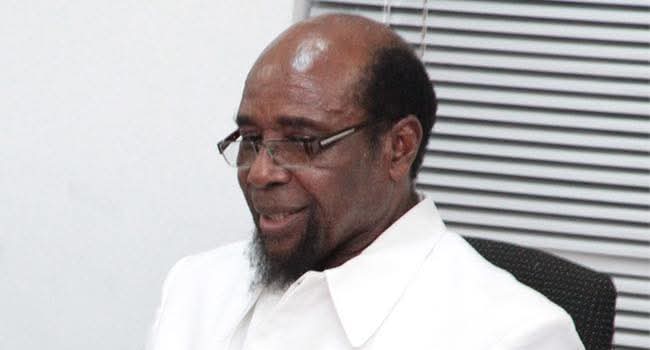
Politics has always rewarded intelligence, but history repeatedly warns us that intelligence without moral restraint can become a dangerous instrument. Uche Chukwumerije remains one of the more compelling Nigerian examples of this paradox. He was intellectually gifted, rhetorically formidable, politically sophisticated and remarkably capable of navigating the difficult terrain between ideology, power and persuasion. Yet his political career also invites a deeper question: when does brilliance cease to be a virtue and become an instrument of manipulation?
The danger of manipulative brilliance is not that the manipulator is unintelligent; it is precisely because he is intelligent. The crude politician can be easily recognised. The dangerous one is often eloquent, informed, composed and persuasive. He knows history sufficiently to weaponise it, understands language sufficiently to disguise intention, and possesses enough political sophistication to make self-interest appear like principle. He does not necessarily lie. Sometimes, he simply arranges the truth in such a way that the audience reaches the conclusion he wants.
Chukwumerije’s public life provides a rich case study in this political paradox. His intellectual capacity was never in serious doubt. He could argue, debate, write and construct political narratives with considerable force. His participation in Nigerian political life traversed different ideological and institutional environments, including the radical political tradition, military-era politics and later democratic politics. His political journey therefore demonstrates something important about Nigerian politics: political intelligence is remarkably adaptable; principles are what determine the direction of that intelligence.
This is where brilliance becomes morally complicated. Intelligence answers the question, “How can this be achieved?” Wisdom asks, “Should it be achieved?” Political cunning asks, “How can I make people believe that what I want is what they should want?” The first is competence. The second is character. The third can become manipulation.
The tragedy of politics is that society often confuses the three.
A politician who can speak beautifully is assumed to think deeply. A politician who quotes history is assumed to understand it. A politician who wins arguments is assumed to be right. But rhetoric is not morality, intellectual capacity is not integrity, and political victory is not proof of political virtue. A sophisticated argument can still serve an unsophisticated purpose.
This is why the politics of personality can be dangerous. Followers frequently become fascinated by the brilliance of political actors and gradually suspend their own capacity for judgment. The politician becomes an intellectual oracle whose every manoeuvre is interpreted as strategy and whose every contradiction is rationalised as sophistication. Eventually, the question stops being, “Is this right?” and becomes, “How clever is this?”
That is the point at which democracy begins to lose something essential.
Democracy requires citizens who can distinguish persuasion from manipulation. Persuasion respects the intelligence of the audience; manipulation exploits its vulnerabilities. Persuasion presents evidence and permits independent judgment; manipulation selectively presents information to manufacture judgment. Persuasion seeks consent; manipulation seeks compliance while disguising it as consent.
The distinction is subtle, and that is precisely why it matters.
Chukwumerije’s political trajectory also reminds us that ideology in Nigerian politics has often been less permanent than political circumstances. The Nigerian political class has historically demonstrated a remarkable capacity to cross ideological boundaries when political opportunity changes. Yesterday’s radical can become tomorrow’s establishment figure; yesterday’s opponent can become today’s ally. This does not necessarily make every political transition fraudulent—politicians can genuinely evolve—but it should make citizens intellectually vigilant.
The fundamental question is not whether a politician changes position. The question is whether the principles explaining the change are visible.
There is nothing inherently wrong with political reinvention. Indeed, democratic politics requires adaptation. But when adaptation becomes permanent and principle becomes negotiable, brilliance can become camouflage. The politician begins to move effortlessly from one ideological position to another, while rhetoric supplies the bridge between contradictions.
This is one of the great dangers confronting emerging democracies. We have become too impressed by political cleverness and insufficiently interested in political character. We celebrate the person who can outsmart an opponent, manipulate a political structure or engineer a spectacular reversal. We call it “political sagacity.” Sometimes it is. Sometimes it is simply the sophisticated pursuit of power.
There is a profound difference between knowing how power works and knowing what power is for.
The first produces political operators. The second produces statesmen.
A political operator asks how to win the next battle. A statesman asks what winning will do to the institution. A political operator measures success by the defeat of opponents. A statesman measures it by the strengthening of society. A political operator accumulates followers. A statesman builds citizens.
This distinction should shape how we assess the legacies of political figures, including Chukwumerije. Historical judgment should neither deify nor demonise. It should interrogate. The purpose of studying political actors is not to manufacture saints and villains but to understand the mechanisms through which power is acquired, justified and exercised.
The real lesson, therefore, is larger than Chukwumerije.
Nigeria does not suffer from a shortage of intelligent people. We suffer from a persistent difficulty in converting intelligence into institutional virtue. We have produced brilliant lawyers, academics, journalists, administrators, soldiers and politicians. Yet brilliance has not always translated into better governance. Sometimes, the brighter the political mind, the more sophisticated the justification for political expediency becomes.
This is why character must remain the governor of intelligence.
Intelligence without ethics can rationalise almost anything. It can explain corruption as pragmatism, opportunism as strategy, betrayal as political maturity and personal ambition as public service. It can even turn failure into mythology and contradiction into sophistication.
The citizen must therefore learn to interrogate political brilliance rather than merely admire it.
Ask: What does this person consistently stand for? What happens when principle conflicts with personal interest? How does the politician treat institutions when institutions become inconvenient? What happens to truth when power is at stake? Does the politician educate citizens or merely excite them? Does his brilliance illuminate reality or make reality harder to see?
These questions are more important than how impressive the politician sounds.
Perhaps the deepest lesson is that democracy is endangered not only by ignorant politicians but also by brilliant politicians without sufficient moral boundaries. Ignorance may produce bad decisions; manipulative brilliance can produce bad decisions that are exceptionally well defended.
That is a far more difficult danger to confront.
The enduring challenge before Nigerian politics is therefore not simply to produce cleverer politicians. It is to produce politicians whose intelligence is disciplined by conscience, whose ambition is restrained by responsibility and whose mastery of political language is matched by fidelity to political truth.
Uche Chukwumerije’s story, examined critically and without sentimentality, offers an opportunity for precisely that reflection. His political life reminds us that brilliance is neither inherently virtuous nor inherently wicked. It is an instrument. Character determines its destination.
And perhaps that is the warning every democracy should remember: the most dangerous politician is not necessarily the one who cannot think; sometimes, it is the one who can think brilliantly enough to make manipulation look like wisdom.