



The Shrinification of Politics: Adekanmbi’s Metaphysics of Power and the Assault on Democratic Discourse || By Timilehin Kolade

Politics, in every democratic society, is fundamentally a marketplace of ideas. It is a contest of vision, competence, persuasion and public trust. Elections are won not in shrines but at the ballot box; not through metaphysical speculation but through organisation, mobilisation and the confidence of the electorate. When politicians abandon these democratic fundamentals for mystical rhetoric, they do a profound disservice to the political culture they seek to lead.
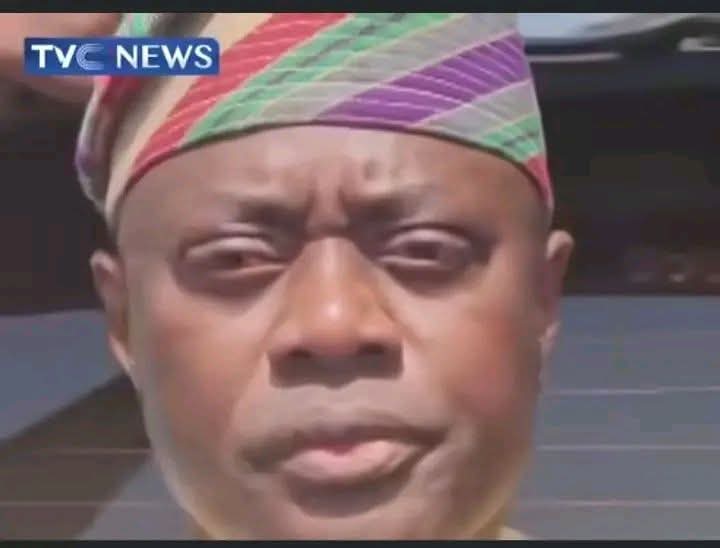
It was against this backdrop that Abimbola Adekanmbi, the governorship candidate of the Allied People’s Movement (APM), granted an interview to Ajibola Akinyefa that generated considerable public debate. In the interview, Adekanmbi reportedly suggested that he could deploy diabolical or fetish powers to unsettle the All Progressives Congress (APC) in Oyo State. Whatever the intention behind the remark, it immediately shifted the conversation from democratic competition to metaphysical speculation.
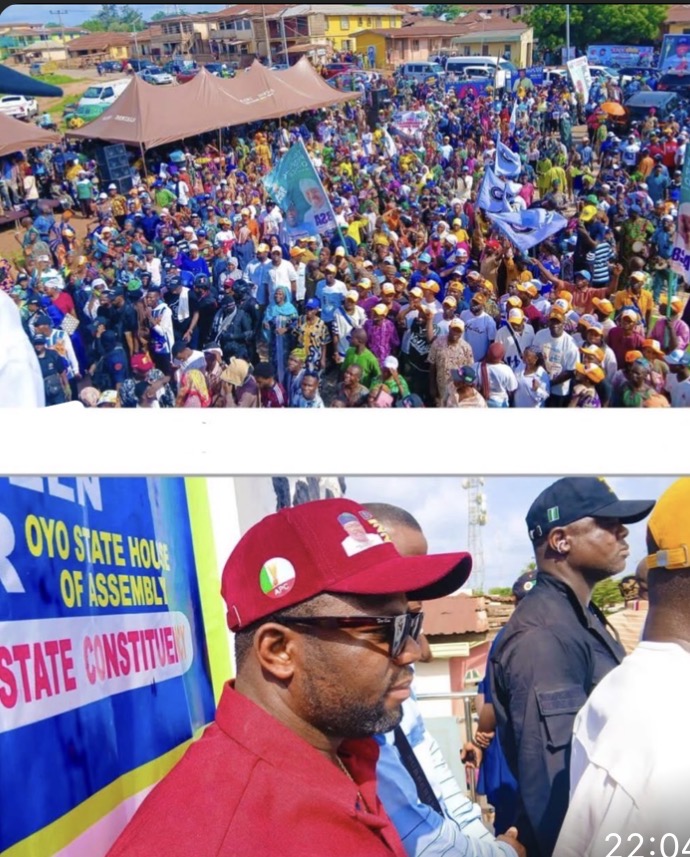
The political context makes the statement even more consequential. The APC is today the principal opposition party in Oyo State and is strategically positioning itself to reclaim the Agodi Government House in the 2027 governorship election. Having adopted Senator Sharafadeen Alli as its governorship candidate, the party has emerged as the foremost challenger to the ruling PDP/APM administration in the state. Consequently, the political landscape ought to be dominated by debates on governance, economic development, education, healthcare, security, infrastructure and institutional reforms. The people of Oyo State deserve to compare competing manifestoes and leadership philosophies, not competing claims of supernatural potency.
It is therefore difficult to reconcile Adekanmbi’s rhetoric with the demands of democratic politics. Rather than confronting the APC and its governorship candidate through policy alternatives, ideological persuasion, electoral strategy and grassroots mobilisation, the conversation appeared to drift into the realm of fetish calculations and metaphysical power. Whether intended as political hyperbole, symbolism or literal assertion, such rhetoric represents a dangerous departure from issue-based politics. It is this tendency that I describe as the shrinification of politics—the gradual transformation of democratic competition into a theatre of mystical symbolism, supernatural insinuation and occult rhetoric.
This critique should not be misconstrued as hostility towards African spirituality or indigenous knowledge systems. Africa possesses one of the richest civilisational traditions in the world. Indigenous African knowledge has made enduring contributions to medicine, philosophy, agriculture, metallurgy, jurisprudence, conflict resolution and community governance. Appreciating these traditions is both intellectually responsible and culturally necessary. However, celebrating Africa’s indigenous heritage should never be confused with introducing fetishism into democratic contestation. The former enriches civilisation; the latter impoverishes democracy.
The expression “metaphysics of power” best captures this unfortunate drift. It is an attempt to explain political power through invisible supernatural agency rather than through democratic legitimacy, public confidence and institutional strength. Such a conception diverts public attention from the real determinants of political success—organisation, credibility, competence, coalition-building and electoral appeal. Democracy rests on the sovereignty of the people, not on the mystique of metaphysical claims.
Political sophistication is measured not merely by eloquence or educational attainment but by the ability to elevate public discourse. Governorship candidates are expected to present coherent blueprints for economic transformation, job creation, educational advancement, agricultural productivity, healthcare delivery, infrastructure renewal and security management. These are the issues that should define the contest for Agodi Government House. The electorate deserves thoughtful policy conversations rather than suggestions that political advantage may be secured through diabolical or fetish means.
History provides an unmistakable lesson. Enduring political victories are achieved through organisation, vision, discipline and the confidence of the electorate. Political parties prevail because they inspire hope, articulate compelling alternatives and build effective grassroots structures. No democratic society has deepened its institutions by replacing political strategy with metaphysical speculation.
If the APC is to be defeated in 2027, it should be defeated through superior ideas, better organisation, stronger grassroots engagement and a more convincing development agenda. Likewise, if the Allied People’s Movement seeks the mandate of the people, it must earn it through democratic persuasion rather than rhetoric that risks legitimising superstition as a political instrument.
Political communication carries enormous responsibility because it shapes civic consciousness. Every public statement by those seeking elective office either strengthens or weakens democratic culture. When influential politicians invoke diabolical or fetish powers as instruments of political struggle, they inadvertently encourage a political environment in which fear competes with reason and mysticism competes with public accountability.
Oyo State deserves better. It deserves a politics of ideas rather than incantations; a politics of policies rather than fetish calculations; a politics of persuasion rather than psychological intimidation. The battle for Agodi Government House must be fought in the marketplace of ideas, on the strength of programmes, and at the ballot box—not in the realm of metaphysical imagination.
Ultimately, the strength of democracy lies in the capacity of its political actors to inspire confidence through ideas, integrity and competence. The future of Oyo State will not be determined by shrines, charms or diabolical rhetoric. It will be determined by the freely expressed will of its people. That is why the shrinification of politics must be firmly rejected, and why democratic discourse must remain anchored in reason, policy and the sovereign mandate of the electorate.
https://shorturl.fm/tvFUz