


BEYOND THE HIGH JUMP: PHYSICAL VITALITY, PRESIDENTIAL CAPACITY AND THE FALLACY IN MAKINDE’S SOUTHWEST ADMONITION |By Aderogba Adebayo Taofik, mni
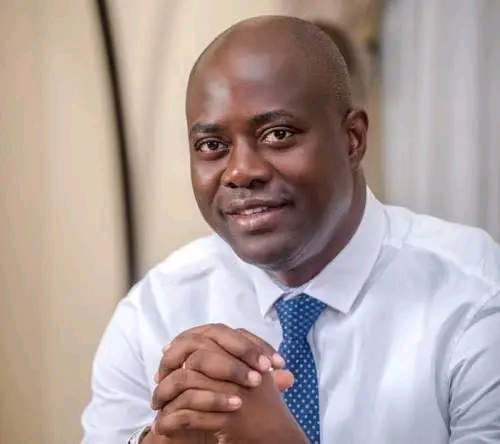
Governor Seyi Makinde’s reported admonition to his supporters in the Southwest — that any presidential candidate who cannot jump from a high ground should be rejected by voters, an unmistakable innuendo directed at President Bola Ahmed Tinubu — presents a fascinating, if troubling, intersection of political rhetoric and governance theory. It compels a critical interrogation: what correlation, if any, exists between athleticism and statecraft?
At first glance, the Governor’s position trades on a potent but simplistic political semiotics. In the Nigerian political imagination, physical agility is often conflated with mental alacrity and capacity to endure the rigours of office. The argument, therefore, is not necessarily about the biomechanics of jumping, but about projecting an image of vigour, youthfulness, and presence as a counter-narrative to perceived frailty. It is a classic populist reductionism — translating complex leadership questions into a visceral, easily demonstrable test.
However, subjected to rigorous analytical scrutiny, the proposition collapses under the weight of both empirical evidence and democratic theory.
First, history repudiates the conflation of physical energy with good governance.
The annals of effective leadership are replete with figures whose physical limitations did not impede transformative governance. Franklin D. Roosevelt led America through the Great Depression and the Second World War from a wheelchair. Winston Churchill, overweight, aged, and often infirm, steered Britain through its darkest hour. At home, we recall President Umaru Musa Yar’Adua — young, agile, and physically present — whose tenure was nonetheless truncated by ill-health, not lack of will. The determinant of good governance has never been the capacity to leap, but the capacity to think, to decide, and to build institutions.
Second, it misdiagnoses the nature of presidential work.
The modern presidency is not a gymnasium; it is a cerebral and institutional enterprise. The President does not carry bags of cement; he carries the burden of policy choice. His functions — policy direction, economic management, diplomatic negotiation, appointment of competent managers, and crisis decision-making — require intellectual depth, emotional intelligence, experience, and moral clarity. Physical stamina is desirable for campaigns, but governance is delegated through systems. What Nigeria needs is not a presidential high-jumper, but a presidential architect who can design the right team, the right policies, and the right economic framework.
President Bola Ahmed Tinubu’s own political trajectory offers a counterpoint. Whether one agrees with his policies or not, his strength has historically been his capacity for political organization, talent recruitment, and strategic endurance — attributes that are cognitive and managerial, not athletic.
Third, it risks descending into ableism and ageism, which are dangerous for our democracy.
To make physical agility a criterion for eligibility is to inadvertently disqualify millions of brilliant, patriotic Nigerians living with disabilities or age-related limitations. It creates a precedent where public discourse degenerates from issues to physiques, from manifestos to gymnastics. For a Governor like Seyi Makinde — himself an engineer, a technocrat who has consistently advocated for data-driven governance and institutional reform in Oyo State — such a rhetorical detour is ironically antithetical to his own brand of issue-based politics.
Final Submission:
Governor Makinde is at liberty to oppose any presidential candidate, including President Tinubu, on grounds of policy, performance, or ideology. That is the essence of democratic contestation. To argue, for instance, that the administration’s economic reforms have imposed hardship, or that its policy sequencing requires correction, would be a legitimate, substantive critique deserving of national debate.
But to predicate rejection on the ability to jump from high ground is to trivialize the electorate and to impoverish political discourse. Voters in the Southwest and indeed across Nigeria do not need a president who can jump; they need a president who can make the naira stable, make food affordable, secure lives, and make policies work.
Physical energy may enhance the optics of leadership, but it does not guarantee its substance. Good governance is measured not by the height a leader can jump, but by how high he can lift his people.
About the Author: Comrade Aderogba Adebayo Taofik, mni, is a unionist in the food, beverage, and tobacco industry, with professional expertise in logistics and supply chains. He is also a policy research and public affairs analyst, an advocate for good governance, and a chieftain of the Oyo APC. He writes from Ward 12, Ibadan North Federal Constituency, Oyo State, Nigeria.