


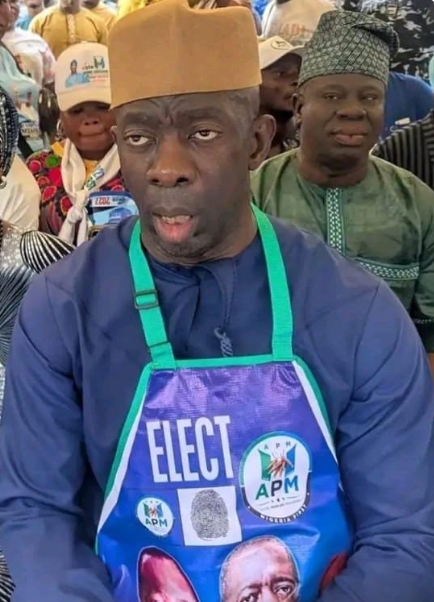


Sharafadeen Alli’s Jimmy Carter-Like Modesty as Political Capital || Timilehin Kolade

By Timilehin Kolade
Politics has traditionally celebrated spectacle. Across nations and political traditions, power has often been measured through visible displays of influence, grand entourages, expansive convoys, and carefully curated symbols of authority. Yet history repeatedly demonstrates that political longevity and moral authority are not always products of extravagance. Some of the most enduring political brands have emerged from leaders who embraced restraint, simplicity, and accessibility. In contemporary politics, where citizens increasingly distrust elite detachment, modesty has evolved beyond a private virtue into a potent political currency.
This is why the modest disposition associated with Senator Sharafadeen Alli deserves political interrogation beyond personality assessment. His simplicity is not merely a character trait; it represents a political asset that can shape identity, strengthen legitimacy, and deepen public trust. In many ways, this political tendency mirrors the tradition represented by former American President Jimmy Carter, whose modest lifestyle became one of the defining pillars of his public image and enduring relevance.
The political relevance of modesty is often underestimated because contemporary politics rewards noise and visibility. However, political history suggests that citizens may admire power, but they trust leaders who appear connected to their realities. Jimmy Carter embodied this principle. Despite occupying the most powerful political office globally, he consistently projected humility and restraint. After his presidency, rather than embracing elite exclusivity, he returned to ordinary community life, participated actively in humanitarian causes, and maintained a lifestyle that reflected personal discipline rather than political grandeur.
Carter’s modesty was initially interpreted by critics as political weakness. Over time, however, history treated it differently. His simplicity became moral capital. Citizens increasingly associated him with authenticity, service, and emotional proximity to ordinary people. The lesson from Carter’s political journey is straightforward: modesty, when authentic, creates credibility that often survives political office itself.
This lesson becomes particularly important within the Nigerian political environment. Nigerian politics has historically normalized extravagant displays of power. Political office frequently translates into visible affluence, extensive entourages, and symbolic separation from ordinary citizens. Yet this same culture has simultaneously produced growing public frustration. Economic hardship, unemployment, inflation, and declining purchasing power have widened the emotional distance between leaders and citizens. Consequently, voters increasingly evaluate leaders not merely through rhetoric but through perceived relatability.
Within this context, Senator Sharafadeen Alli’s modest disposition creates political differentiation. In politics, distinction matters. When political actors project similar messages using identical methods, authenticity becomes the distinguishing variable. A politician perceived as accessible, restrained, and grounded naturally occupies a different psychological space within public consciousness.
Global political history offers extensive evidence that simplicity can strengthen leadership legitimacy. Former Uruguayan President José Mujica became internationally admired not because of wealth accumulation or elaborate displays of office but because of extraordinary simplicity. He lived modestly, maintained ordinary routines, and projected an image of leadership rooted in service rather than privilege. His lifestyle strengthened his credibility because citizens saw consistency between his politics and personal conduct.
Similarly, former Tanzanian President Julius Nyerere cultivated a political identity strongly associated with discipline and simplicity. Although political debates around governance remain, his modest lifestyle reinforced his moral authority and strengthened public respect. Former Indian Prime Minister Lal Bahadur Shastri similarly understood the political power of restraint. During periods of national hardship, he consciously aligned personal conduct with public suffering, thereby strengthening emotional solidarity with citizens.
Perhaps one of Africa’s greatest examples remains Nelson Mandela. Despite enormous global influence and iconic status, Mandela consistently projected accessibility and personal restraint. His humility amplified his legitimacy because citizens rarely disconnect modest behavior from moral authority. Across these diverse political contexts, one pattern remains constant: simplicity strengthens trust.
Nigeria’s political history also provides important parallels. Some of the country’s most respected political figures built enduring reputations not merely through office but through discipline, restraint, and personal simplicity. Chief Obafemi Awolowo cultivated an image of ideological clarity and personal discipline that made his politics appear larger than personal ambition. Former President Umaru Musa Yar’Adua projected modesty and restraint in both personal conduct and governance style, which contributed significantly to public perceptions of sincerity. Even figures such as Lateef Jakande built political admiration partly because many citizens perceived their lifestyles and governance philosophies as closer to public service than elite exhibitionism.
These examples matter because political memory often rewards leaders who appear to embody the values they publicly advocate. In this regard, Senator Sharafadeen Alli’s modest disposition fits within a political tradition that values restraint over flamboyance and accessibility over distance.
Trust remains perhaps the most valuable currency in modern politics because citizens increasingly judge leaders through emotional and symbolic indicators rather than policy declarations alone. Modesty functions effectively because it humanizes leadership. Citizens naturally identify more closely with leaders who appear accessible. Simplicity also reduces symbolic distance. Excessive luxury often creates psychological barriers between citizens and public officials, while restraint narrows those barriers.
Beyond emotional connection, modesty communicates discipline. Public perception frequently assumes that leaders who demonstrate personal restraint are more likely to exercise institutional restraint. This assumption may not always be accurate, but politics frequently operates through perception. Furthermore, modesty creates consistency between message and conduct. Leaders advocating sacrifice while displaying extravagance often encounter credibility crises. Simplicity eliminates such contradictions.
However, political modesty only succeeds when authentic. Modern electorates increasingly recognize performative humility. Carefully staged simplicity without corresponding behavior often generates cynicism rather than admiration. Jimmy Carter’s enduring relevance did not emerge because he occasionally projected humility; it emerged because humility appeared inseparable from his identity.
This presents an important challenge and opportunity for Senator Sharafadeen Alli. If modesty is to become political capital, it must remain consistent across circumstances. Accessibility cannot exist only during election cycles. Simplicity cannot become ceremonial. Public service must consistently appear more important than spectacle. Authenticity transforms modesty from personality into political philosophy.
Within Oyo politics specifically, modest leadership may possess additional strategic significance. Political history within the state repeatedly demonstrates that emotional connection frequently outweighs elite sophistication. Grassroots identification remains central to political survival. Consequently, leaders perceived as grounded often build stronger long-term political loyalty than leaders associated primarily with elite exclusivity.
For this reason, Senator Alli’s modest disposition should not remain merely a private virtue. It should become part of a broader political narrative centered on accessibility, discipline, service, and emotional proximity to ordinary citizens. Political narratives become powerful when personal character aligns with public expectation. Like the tradition represented by Awolowo’s disciplined politics, Yar’Adua’s restrained public image, and Jimmy Carter’s humility, modesty can become more than temperament; it can become political philosophy.
Nigeria’s political environment is gradually changing. Citizens increasingly demand leaders who appear competent, relatable, and authentic. While the politics of spectacle remains influential, worsening economic realities have created stronger demand for political empathy and visible restraint. In such circumstances, modesty evolves from mere personal preference into strategic relevance.
The simplicity associated with Senator Sharafadeen Alli therefore deserves greater political appreciation. Like Jimmy Carter and other globally respected leaders who embraced restraint despite immense political attainment, his modesty potentially represents more than personality. It represents discipline. It represents accessibility. It represents emotional intelligence. Most importantly, it represents an alternative political language in an era dominated by excess.
History consistently rewards leaders whose personal conduct reinforces public trust. In politics, authority may command attention, but modesty sustains legitimacy. That may ultimately become one of Senator Sharafadeen Alli’s strongest political assets.