





Bob Marley’s One Love, Oyo APC and the 1992 Lagos SDP Lesson || Timilehin Kolade
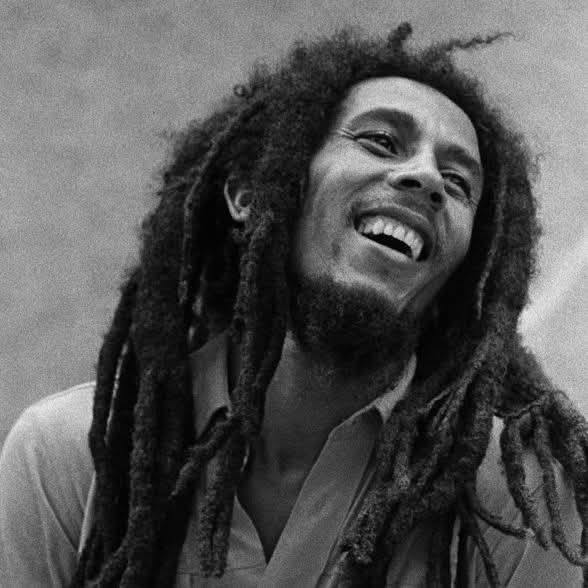
In one of the most enduring political messages ever delivered through music, Bob Marley urged humanity to embrace a simple but profound ideal: One Love. Though often celebrated as a cultural anthem, the song carries a deeper political message. It is a call for unity amidst diversity, reconciliation amidst disagreement, and collective purpose amidst competing interests. Marley understood that communities, organizations, and nations can only achieve greatness when they rise above internal divisions and pursue a common objective.
Today, as the All Progressives Congress (APC) in Oyo State navigates the increasingly competitive terrain leading to the 2027 governorship election, the philosophy embedded in One Love offers a timely lesson. The challenge confronting the party is not a shortage of capable aspirants or influential stakeholders. Rather, it is whether those ambitions can be harmonized in a manner that strengthens the party instead of weakening it. Put differently, the question before the Oyo APC is whether it can embrace the spirit of One Love without suppressing legitimate political competition.
Political competition is neither abnormal nor undesirable. Democracy thrives when individuals present competing visions and subject themselves to the judgment of party members and the electorate. The danger arises when competition transforms into antagonism, when political rivals begin to see one another as enemies rather than teammates, and when victory in a primary election becomes more important than victory in the general election. At that point, a political party ceases to function as a coalition of interests and gradually becomes a battlefield of irreconcilable factions.
History offers a powerful warning against such tendencies. One of the most instructive examples can be found in the crisis that engulfed the Lagos State chapter of the Social Democratic Party (SDP) during Nigeria’s Third Republic.
The SDP was arguably the most formidable political force in Lagos at the time. It possessed an extensive grassroots network, enjoyed widespread popularity, and appeared well-positioned to consolidate its dominance. Yet, beneath this strength lay internal divisions that gradually weakened the party from within. Rivalries among influential actors, particularly between political tendencies associated with Chief Dapo Sarumi and Professor Femi Agbalajobi, contributed to deep factional disagreements that eroded party cohesion.
What made the situation remarkable was that the SDP did not suffer from a shortage of electoral strength. Rather, it suffered from a deficit of internal harmony. As disagreements intensified, factional loyalties increasingly overshadowed collective interests. The party became consumed by internal contests while its opponents concentrated on electoral strategy. The ultimate beneficiary of this fragmentation was the National Republican Convention (NRC), which successfully exploited the divisions within a party that should ordinarily have been difficult to defeat.
The lesson remains relevant more than three decades later. Political parties are rarely defeated by their opponents alone. More often, they are weakened by internal conflicts that create opportunities for external adversaries. History repeatedly demonstrates that electoral strength can be neutralized by factional hostility, mutual suspicion, and an inability to subordinate personal ambitions to broader organizational objectives.
This lesson deserves careful consideration within the context of contemporary Oyo politics.
The Oyo APC is home to several prominent political figures whose governorship ambitions have generated considerable interest. Among them are Adebayo Adelabu, Senator Sharafadeen Alli, Chief Akeem Agbaje, Senator Abdulfatai Buhari, former Deputy Governor Rauf Olaniyan and other notable stakeholders whose aspirations reflect the vibrancy of the party. Their participation in the race should ordinarily be viewed as evidence of political vitality rather than a source of anxiety.
The challenge before the party is therefore not the existence of multiple aspirants. The challenge is whether the party can manage these ambitions in a manner that strengthens rather than weakens its internal cohesion.
This is where the concept of conflict transformation becomes particularly important.
Political actors often speak about conflict resolution, but conflict transformation offers a deeper and more sustainable framework. While conflict resolution focuses on ending disputes, conflict transformation seeks to address the underlying conditions that produce disputes in the first place. It recognizes that disagreements are inevitable in political organizations and that the objective should not be the elimination of conflict but its constructive management.
Applied to the Oyo APC, conflict transformation requires more than calls for peace. It requires the creation of processes that inspire confidence among all stakeholders. It requires transparent decision-making, inclusive consultations, mutual respect among aspirants, and an institutional culture that discourages victor’s arrogance and loser humiliation.
One of the recurring problems in Nigerian politics is the tendency of victorious factions to interpret success as a mandate for exclusion. Defeated groups are often expected to quietly accept their fate without meaningful accommodation. Such approaches may produce temporary calm, but they rarely produce lasting unity. Political grievances that are ignored do not disappear; they merely accumulate until they re-emerge in the form of defections, anti-party activities, voter apathy, or electoral setbacks.
The real test of political maturity is therefore not how parties conduct themselves before primaries but how they behave after winners and losers emerge.
Sportsmanship is indispensable in this regard.
Every aspirant must understand that today’s rival may become tomorrow’s indispensable ally. Likewise, supporters must resist the temptation to transform political competition into personal warfare. Elections are temporary; relationships and institutions endure. The future of the party cannot be built on triumphalism, mockery, or the systematic exclusion of those who happen to be on the losing side of an internal contest.
For the leadership of the Oyo APC, the responsibility is even greater. The party must consciously create mechanisms that guarantee inclusion and prevent alienation. Aspirants who do not secure the ticket must still feel that they belong within the party and that their contributions remain valued. Genuine reconciliation must go beyond ceremonial meetings and public photographs. It must address perceptions of marginalization and create a shared sense of ownership over the party’s future.
In many ways, this is the true meaning of Bob Marley’s One Love. The song was never an appeal for the absence of differences. It was an appeal for the management of differences in pursuit of a common destiny. Political parties, like societies, do not require uniformity to survive. They require a shared commitment to a larger cause.
As the contest for the 2027 governorship election gathers momentum, the Oyo APC faces a defining moment. The party can choose the path of accommodation, sportsmanship, and conflict transformation, or it can allow factional competition to degenerate into a struggle that weakens its collective capacity.
The experience of the 1992 Lagos SDP stands as a cautionary tale. A politically dominant party, confident in its strength, became vulnerable because internal divisions overshadowed common interests. The tragedy was not the existence of ambition but the failure to effectively manage it.
For Oyo APC, the challenge is clear. The road to Agodi Government House will not be determined solely by the popularity of any individual aspirant. It will also depend on the party’s ability to preserve unity amidst competition, maintain cohesion amidst diversity, and place collective victory above factional triumph.
Perhaps that is why Bob Marley’s message remains remarkably relevant decades after it was first sung. The challenge before Oyo APC is not merely to produce a governorship candidate. It is to demonstrate that political competition can coexist with political brotherhood, that ambition can coexist with loyalty, and that rivalry can coexist with mutual respect.
If the party can achieve that balance, it would have embraced the enduring wisdom of One Love. If it fails, the painful lesson of the 1992 Lagos SDP crisis may once again remind politicians that parties are often defeated not by the strength of their opponents but by the depth of their own divisions.