

ANALYSIS OF GOVERNOR SEYI MAKINDE’S 2027 BUDGET OF SUSTAINED PROGRESS: ITS DEFICIENCIES TO THE PEOPLE AND THE FUTURE OF OYO STATE BEYOND 2027 | Aderogba Adebayo Taofik, mni
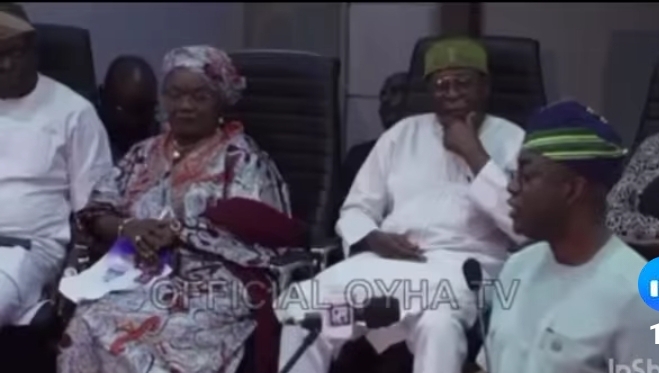
Governor Seyi Makinde’s final budget presentation before the Oyo State House of Assembly on Tuesday, 10th November, 2026, was deliberately crafted as a valedictory address. Clothed in the language of consolidation, continuity, and institutional legacy, the ₦1,115,341,378,359.90 Budget of Sustained Progress seeks to present an administration leaving office on a high note.
But when the rhetoric is stripped away and the figures are subjected to sober scrutiny, the budget reveals more of what it conceals than what it promises. It is a transition budget, presented by a departing government, to be implemented largely by a successor government that had no part in its formulation. That fundamental contradiction is the source of its major deficiencies.
1. A Budget Without Ownership: The Problem of Transition
The Governor himself admitted that his administration would implement only a part of this budget before handing it over on 29th May, 2027. The remainder will pass to the next administration.
This raises a serious governance question: How can a government that will be out of office in six months credibly commit ₦1.1 trillion on behalf of the people for a full 12 months?
A budget is not just figures; it is a statement of priorities, a contract. A successor government elected on a different manifesto, such as the Oyo Ahead Vision, cannot be morally bound by the spending priorities of a departing regime. The result is predictable: abandonment, revision, and waste of legislative time, and the risk that projects started in the first five months of 2027 will be left uncompleted.
The claim of a “first formal handover” therefore rings hollow if the handover itself is used to tie the hands of the incoming government.
2. The Illusion of Capital Expenditure
The budget boasts that 60.07% (₦670.03 billion) is allocated to capital expenditure and only 39.93% to recurrent. On paper, this looks developmental.
In reality, Oyo people have lived through eight years of budgets where capital performance rarely matched capital promise. Roads awarded but not completed, projects re-awarded, and recurrent costs disguised as capital have been recurring features. Without a published, audited record of the 2026 capital budget performance – what percentage was actually released, what percentage was actually implemented – the 60% figure remains an aspiration, not an achievement.
Furthermore, infrastructure received 21.17% (₦236.14 billion), but the speech is silent on maintenance. Oyo State today is littered with roads that deteriorated within two years of commissioning because maintenance was not institutionalised. A budget that builds new infrastructure without a maintenance fund is a budget that creates future liabilities.
3. Agriculture: The Sector That Feeds Oyo Gets 2.14%
Perhaps the most glaring deficiency is agriculture.
Despite the Governor’s lengthy praise for OYSADA, Fasola, and agribusiness, agriculture receives a paltry ₦23.84 billion, representing only 2.14% of the total budget.
For a state that prides itself on comparative advantage in agriculture, that employs the majority of its rural population, and that faces rising food inflation, this is indefensible. The Maputo Declaration recommends 10% for agriculture. Oyo’s 2.14% is a clear admission that agriculture, in budgetary terms, is not a priority.
The Governor argues that other sectors complement agriculture. But farmers in Ibarapa, Oke-Ogun, and Iseyin do not eat complementarity. They need inputs, storage, processing, rural roads, and security from herders’ attacks – all of which require direct funding. The celebrated Fasola project, with its 1,000 jobs, cannot feed a state of over 8 million people.
4. Healthcare and Education: Below Need, Despite Benchmarks
Education receives ₦190.52 billion (17.08%), which the Governor proudly notes is within the UNESCO benchmark of 15-20%. But percentage is not impact. After seven years, many public schools in Oyo still lack desks, laboratories, and teachers. The claim of bringing 65,000 out-of-school children back is not backed by verifiable data on retention, learning outcomes, or teacher-pupil ratio.
Healthcare receives only ₦93.01 billion (8.34%), far below the 15% Abuja Declaration target for health. The induction of 3,933 primary healthcare workers is commendable, but without drugs, equipment, electricity, and decent pay, those workers will be present but ineffective. Oyo people still travel to private hospitals for basic care because public facilities remain under-equipped.
5. Revenue: IGR Growth Without Corresponding Relief
The Governor celebrates IGR growth of 288%, from ₦26.59 billion in 2019 to ₦103.25 billion in 2025.
But the people of Oyo ask a different question: Has this growth translated to a reduction in the burden on the common man, or has it meant more taxes, levies, and fees on traders, artisans, transporters and small businesses?
A government that grows its revenue by squeezing an already impoverished population, while workers still complain about promotion arrears, pension delays, and cost of living, has not achieved economic progress. It has achieved extraction.
The budget is also silent on debt. How much does Oyo State owe today? How much of the 2027 revenue will go to debt servicing? A budget that does not disclose its debt burden is not transparent; it is selective.
6. The Missing Issues: Local Government Autonomy, Youth and Security
For all its length, the speech is conspicuously silent on three issues that matter most to Oyo people today.
First, Local Government Autonomy. There is no commitment to financial and administrative autonomy for the 33 LGAs. The budget remains a state-centred budget, with local governments as appendages. This is the exact opposite of what the people demanded during consultations.
Second, Youth Unemployment. There is no clear youth employment target, no industrialisation plan, and no SME fund with measurable outcomes. The anecdotes of “Mr Ogundipe” and “Kunle” cannot substitute for a jobs policy.
Third, Security. Beyond a passing reference, there is no concrete security budget, no plan for Amotekun’s welfare, equipment, and intelligence capacity, despite rising kidnapping and farmer-herder clashes in Oke-Ogun and Ibarapa.
THE FUTURE OF OYO STATE BEYOND 2027
The future of Oyo State beyond 2027 cannot be built on a transition budget. It must be built on a new social contract.
It requires a government that will:
- Restore Local Government Autonomy – so development reaches the grassroots, not stops at the Secretariat.
- Re-balance the Budget – giving agriculture, health, security and job creation their rightful share, not token allocations.
- Institutionalise Transparency – publishing quarterly budget performance, debt profile, and contract awards for public scrutiny.
- Move from Projects to Institutions – building systems that survive governors, not monuments that glorify them.
- Empower the People – through industrialisation, vocational skills, and ease of doing business, not through anecdotes.
Governor Makinde’s 2027 budget is a farewell statement. It attempts to define his legacy. But legacy is not defined by the governor who presents a budget; it is defined by the people who live with its consequences.
Oyo State, beyond 2027, needs more than sustained progress. It needs a reset of priorities, a return of power to the local governments and the people, and a leadership that understands that the true measure of governance is not how much government collects, but how much the people prosper.
That is what the Oyo Ahead Vision of Senator Sharafadeen Abiodun Alli offers.
We call on the House of Assembly to scrutinise this budget rigorously and not approve a farewell wish-list that ties the hands of the incoming government.
That is the challenge that awaits the next administration. And that is the choice before the people of Oyo State.