

“I WILL NEVER BE A GODFATHER…” — A PROSE REFLECTION ON PROMISES, PERFORMANCE, AND THE 2027 CHOICE IN OYO STATE //By Aderogba Adebayo, mni
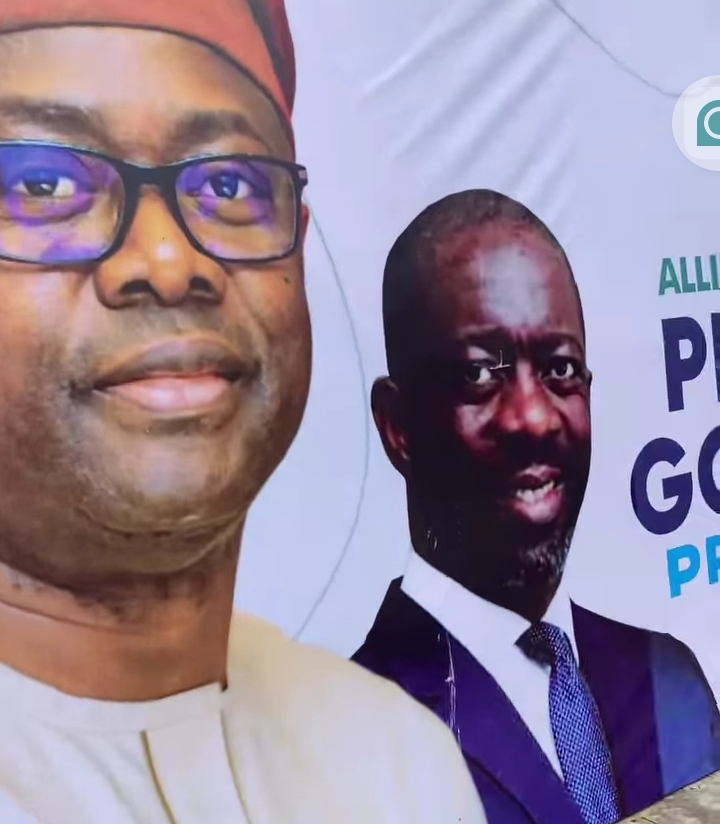
When Governor Seyi Makinde declares, “I will never be a godfather to the coming Oyo State government. Bimbo Adekanbi and Hon. Open Salawu will be responsible to the people of Oyo State,” the statement is meant to convey detachment and democratic restraint. How sincere is the governor in making this statement? What are his antecedents in fulfilling promises.
Yet in politics, antecedents speak louder than declarations. A leader is judged not only by what he says today, but by the ledger of what he has done, and left undone, since he first asked for the mandate.
The Record: Where Promises Collided with Reality
- Electoral and Coalition Agreements
It is a well know fact that the coalition candidates stepped down for Seyi Makinde in 2019. Senator Olufemi Lanlehin, the ADC candidate and one of those who stepped down for Makinde, publicly stated that Makinde “has yet to fulfil any of the promises he made to me” after surrendering my mandate in the interest of upstaging the APC.
Makinde would later counter that he “had fulfilled all agreements” entered into with coalescing parties. The divergence itself reveals a governance style where perception and delivery are contested terrain — a troubling sign when trust is the currency of leadership. - Workers’ Welfare and Minimum Wage
During the 2019 campaign, Makinde was quoted as saying Oyo workers “deserved more than N30,000 as minimum wage.”After assuming office, he was reported as saying he “could not pay the N30,000 minimum wage”. That U-turn, flagged early by the APC, set a pattern critics cite: lofty campaign rhetoric followed by fiscal pragmatism that leaves constituents feeling misled. - Water and Infrastructure: The Eruwa Dam Case
In 2023, seeking re-election, Makinde promised to upgrade the Eruwa Dam within one year and ensure clean water within 3 years. By 2025, advocacy trackers rated the promise “Broken” — the dam remains in disrepair, water is still brown, and residents still trek long distances for portable water.
Water is not a luxury; it is a constitutional and public-health imperative. When a lifeline project becomes a symbol of neglect, it erodes the very trust a government needs to govern. - Economy, Credit, and Land Policy
Opposition voices in 2024 argued that “the economic situation across the state is at its worst stage due to the failure of the Makinde-led administration” despite increased federal allocations. Allegations were raised that low-interest credit and inputs were skewed toward ruling-party members, and that farmlands reserved for agriculture were being converted to estates beyond the reach of the masses.
Whether fully accurate or politically framed, these perceptions matter because they shape how citizens experience governance daily. - Transparency and Disaster Funds
After the January 2024 Bodija explosion, only ₦30bn of a promised ₦50bn federal support was released, with claims of withheld balance tied to inducements. It essential to know that leaving public billions inactive in a high-inflation environment as we have in todays Nigera is a form of fiscal negligence and that transparency risks becoming performative rather than substantive. For an administration that brands itself “Omituntun,” opacity in crisis management damages that brand.
Why Antecedents Matter for 2027
Leadership is transitive. A governor’s protégés inherit not just his structure, but his credibility. If the principal is perceived to have:
- Reversed positions on wages,
- Left flagship promises unkept like Eruwa Dam,
- Presided over contested delivery on coalition agreements, and
- Struggled with transparency on public funds,
Then the electorate is entitled to ask: will the anointed successors break that cycle, or merely administer it?
APM, as the platform being advanced, will be measured against the same yardstick. Voters in 2027 will weigh whether to reward continuity or demand correction. In my humble opinion, the second option is the obvoius because you can only fool the people some time, and not all the time. “Ogbón odun yi, wèrè ęęmi”
The Case the Electorate Must Consider
Oyo State deserves governance that is not only infrastructurally visible but also contractually reliable. Democracy is a covenant. When promises on water, wages, and welfare remain outstanding, the moral authority to transfer power to chosen successors is diminished.
The question before Oyo voters is not about personality alone. It is about institutional memory: Do we endorse a lineage of governance where the gap between promise and performance has become structural? Or do we insist on a reset, the one where accountability is not a slogan, but a practice?
Makinde’s statement on not being a godfather may be an attempt to defer responsibility. But responsibility is not deferred; it is accumulated. A decietful statemement in purpose and intention. In 2027, the people of Oyo will decide whether that accumulation warrants renewal, or requires redirection. Governance, after all, is judged not by intentions announced, but by lives improved. How well has this government faired is in the public dormain, the same public will decide the way forward come 2027.
About the Author: Comrade Adebayo Taofik Aderogba, mni, is a unionist in the food, beverage, and tobacco industry, with professional expertise in logistics and supply chains. He is also a policy research and public affairs analyst, an advocate for good governance, and a chieftain of the Oyo APC. He writes from Ward 12, Ibadan North Federal Constituency, Oyo State, Nigeria.