


Local Government and the Contradiction of Two Federating Units: Oyo State in Perspective || By Ajadi Isaac

Local Government and the Contradiction of Two Federating Units: Oyo State in Perspective
It was the 1976 Local Government Reform that recognized local government as the third tier of government in Nigeria. The reform provided constitutional empowerment for local governments to receive statutory federal allocations, enjoy a level of autonomy, and perform clearly defined functions among other responsibilities.
The reform was initiated under the leadership of the former military Head of State, General Murtala Muhammed, before his assassination, and was later implemented during the administration of General Olusegun Obasanjo.
Before this reform, there was no uniform structure in the operation of local governments. They were neither regarded as a tier of government nor constitutionally recognized and empowered as distinct government entities.
However, the reform brought a new sense of hope and development to the citizenry. Nigerians began to feel the impact of government more directly at the grassroots level. Inter-village roads were constructed, boreholes were provided, maternity centres and primary healthcare facilities were established, and political participation increased across communities. This was undoubtedly a welcome development, particularly for rural dwellers.
Local government also serves as a prototype for the larger national political system. It provides an avenue for policy experimentation, leadership training, and political education for aspiring national actors.
Just as scientists, doctors, and researchers use specimens to test and evaluate ideas, local governments have historically served as a platform for testing public policies. A policy that fails at the local government level during its trial phase may not be suitable for implementation at the national level, while policies that record remarkable success at the grassroots level may have the potential for wider application.
Despite these significant roles of local government, the contemporary reality presents a different picture.
In recent times, local governments have been reduced to mere appendages of state governments — glorified administrative offices occupied by individuals appointed for the sake of administration rather than institutions driving transformational development.
Inter-village roads that were once maintained by local governments have deteriorated, while the provision of portable water has increasingly become associated with constituency projects of National Assembly members rather than the responsibility of local councils. Even projects within local government areas are now frequently executed by state governments, leaving local government administrators to merely supervise activities that constitutionally fall within their responsibilities.
In federal systems such as the United States, Canada, France, and Nigeria, it is often argued that there are two major federating units: the federal and state governments. Local governments are generally viewed as entities created under state authority. However, in many of these countries, local governments still maintain clearly defined responsibilities without unnecessary interference from higher levels of government.
In some countries, local governments even operate their own security structures, such as county policing systems in parts of the United Kingdom.
Why is Nigeria’s situation different?
Although Section 162(6) of the 1999 Constitution established the State Joint Local Government Account (SJLGA), which provides a framework for managing local government allocations through the states and distributing such funds among councils based on constitutional principles, the system has generated debates over the financial independence of local governments.
The Supreme Court judgment of Thursday, 11 July 2024, however, changed the conversation by affirming the financial autonomy of local governments and directing that allocations meant for democratically elected local councils should be paid directly to them.
Oyo State in Perspective
Oyo State, despite operating under the same constitutional framework over the years, has experienced different approaches to local government administration.
For instance, local governments during the administration of the late former Governor Lam Adesina enjoyed a significant level of autonomy. The councils were led by democratically elected chairmen following the local government elections conducted nationwide on 5 December 1998 as part of General Abdulsalami Abubakar’s transition programme to civilian rule.
Similarly, local governments under former Governor Rashidi Ladoja enjoyed a considerable level of independence. I recall the remarkable achievements of the late former Chairman of Oriire Local Government, Alalade, whose performance contributed to his later transition into the position of Commissioner.
During the administration of the late former Governor Adebayo Alao-Akala, Oyo State witnessed one of the most remarkable periods of local government administration. Local government chairmen at the time recorded significant achievements, and many of them remain politically relevant within their respective councils today.
Examples include Hon. Yemi Aderibigbe of Akinyele, Akogun of Ibadan South East, Hon. Oyedepo of Oriire, Hon. Felix Akande of Ogbomoso South, and Hon. Ademola Kamil Omotoso of Ibadan North, among others.
These individuals were able to make lasting impacts because they operated within an environment where local governments were empowered to function effectively.
Even during the administration of the late former Governor Abiola Ajimobi, when caretaker chairmen were appointed for over seven years, some of the appointed administrators recorded notable achievements in their respective local government areas.
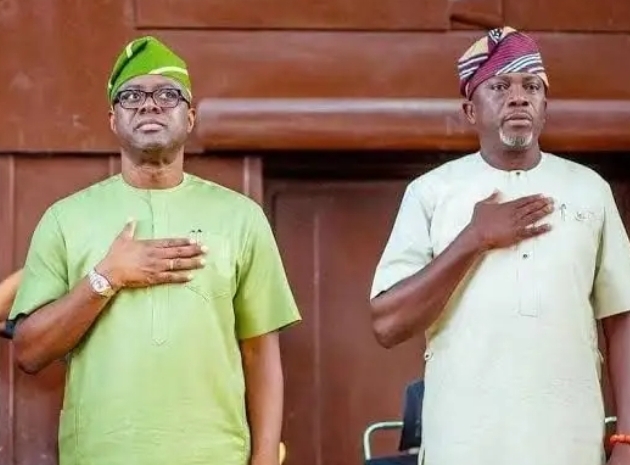
Then came the administration of Governor Seyi Makinde.
Since assuming office, Governor Makinde has made it clear that he does not subscribe to the idea of full local government autonomy. During a governorship debate organized by Splash FM, he argued that Nigeria operates within the reality of two federating units.
While the constitutional argument about two federating units exists in many federal systems around the world, it should not translate into weakening local government institutions. Countries operating with two major federating units still maintain strong and functional local government systems with clearly defined responsibilities.
The fact that the 1976 reform recognized local government as a third tier of government and an important institution of governance remains a strong basis for ensuring that local councils are empowered to deliver effectively.
Across Oyo State today, many local government structures appear neglected, underdeveloped, and unable to fulfil their constitutional responsibilities. The question remains: where do we go from here, Governor Makinde?
Yes, Nigeria may operate within the framework of two major federating units, but local government remains a constitutionally recognized tier of government and must be treated with the dignity, authority, and responsibility it deserves.
Thank you.
Ajadi IsaacContact: ajadiisaac76528@gmail.com
Mình thấy 888slot 1 phù hợp cho cả người mới lẫn người chơi lâu năm. TONY07-20