





The Long Shadow of June 12: Abiola, Power and Nigeria’s Democratic Struggle || Timilehin Kolade
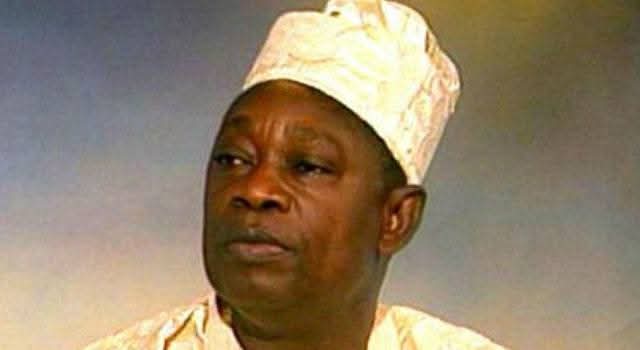
Nigeria’s democratic history is a long negotiation between hope and betrayal, between the promise of collective self-rule and the reality of elite contestation over power. Few moments capture this tension as sharply as the presidential election of June 12, 1993—a watershed that was expected to consolidate Nigeria’s return to civil rule but instead became the most enduring symbol of its democratic incompleteness.
More than three decades later, June 12 remains less an event than a political memory that continues to shape Nigeria’s understanding of legitimacy, citizenship, and resistance. It is a reminder that democracy is not merely the conduct of elections, but the acceptance of outcomes, the strengthening of institutions, and the restraint of those who wield power.
Nigeria’s First Republic, led by figures such as Sir Abubakar Tafawa Balewa, Chief Obafemi Awolowo, Dr. Nnamdi Azikiwe, and Sir Ahmadu Bello, represented the early attempt to construct a parliamentary democracy within a deeply plural society. While it produced significant nationalist achievements, it was weakened by regional rivalry, electoral disputes, and fragile institutions. The military coup of January 1966, followed by civil war, fundamentally altered Nigeria’s political trajectory. The armed forces became dominant arbiters of political authority, justifying repeated interventions as necessary correctives to civilian misrule. Over time, military rule entrenched itself, reshaping governance into a hierarchical order where political legitimacy flowed from command rather than consent.
By the 1980s, the demand for democratization had become unavoidable. When General Ibrahim Badamasi Babangida assumed power in 1985, he introduced an elaborate transition programme designed to restore civilian rule. Yet the process increasingly revealed a contradiction at its core: it sought to produce democracy while retaining military control over its outcomes. The creation of the Social Democratic Party (SDP) and the National Republican Convention (NRC) was meant to structure political competition, but it also placed the military at the centre of political engineering.
It was within this controlled framework that the 1993 presidential election was conducted between Chief Moshood Kashimawo Olawale Abiola and Alhaji Bashir Tofa. Abiola’s candidacy, reinforced by his running mate Ambassador Babagana Kingibe, projected a rare sense of national balance and unity across Nigeria’s entrenched ethnic and regional divisions. The election itself was widely regarded as credible and broadly accepted, making its annulment on June 26, 1993, a decisive rupture in Nigeria’s political evolution. The annulment did not merely interrupt an electoral process; it destroyed the fragile trust between the state and the electorate and signalled that popular sovereignty could still be overridden by military fiat.
The annulment transformed June 12 into a national legitimacy crisis. The question was no longer who won the election, but whether the Nigerian state could ever be trusted to respect the will of its citizens. Resistance emerged almost immediately, and the National Democratic Coalition (NADECO) became the most organised platform opposing military rule. It brought together politicians, intellectuals, labour leaders, and civil society actors determined to restore the annulled mandate and end authoritarian governance. Senator Abraham Adesanya emerged as a moral voice of resistance, while Alfred Rewane financed democratic activism until his assassination in 1995 demonstrated the deadly risks of opposition. Frank Ovie Kokori mobilised organised labour and endured detention, while Wole Soyinka provided international intellectual advocacy that exposed Nigeria’s crisis to the world. Figures such as Kayode Fayemi, Joe Odumakin, and Yinka Odumakin represented a younger generation of resistance politics that sustained pressure on the regime.
Within this broader movement, Kudirat Abiola emerged as one of the most consequential figures of the June 12 struggle. Her transformation from private citizen to political actor reflected the radicalisation of resistance under repression. She became a central organiser of anti-regime mobilisation and a symbol of uncompromising defiance. Her assassination in 1996 revealed the extreme risks faced by those who directly challenged military authority and deepened the moral gravity of the struggle.
The June 12 crisis also unfolded within the Abiola family, where political pressure, personal loyalty, and strategic disagreement intersected. As Chief Moshood Kashimawo Olawale Abiola remained in detention, his household became indirectly entangled in the wider political struggle. Within this context, differing perspectives emerged among family members, particularly between Kudirat Abiola and Kola Abiola. While Kudirat aligned with external pressure strategies associated with NADECO, Kola Abiola and others were often associated with more cautious positions shaped by concerns over negotiation, family survival, and the uncertainty of the political environment. These tensions reflected the broader national dilemma over whether democratic restoration could be achieved through confrontation alone or required political engagement with the regime.
The transition from Babangida to General Sani Abacha introduced a more repressive phase of military rule but also exposed the political ambiguities of Nigeria’s elite. Abiola’s position during this period was complex, as he remained the symbolic victor of the annulled election while also navigating moments of attempted negotiation and indirect engagement with elements of the military establishment. His 1994 Epetedo Declaration, in which he proclaimed himself president, marked a decisive break with this ambiguity and led to his arrest and continued detention.
A defining feature of this era was the decision by several prominent associates of Abiola to serve within the Abacha government. Figures such as Lateef Jakande, Babagana Kingibe, Solomon Lar and Olu Onagoruwa accepted political appointments within a regime widely regarded as illegitimate by the pro-democracy movement. Their participation complicated the moral unity of the June 12 struggle, weakened the coherence of resistance, and provided the military regime with a layer of civilian legitimacy it had not earned through democratic consent. It also reflected a broader pattern in Nigerian politics where elite survival and pragmatism often override ideological consistency, particularly under authoritarian conditions.
Under Abacha, Nigeria experienced intensified repression, mass detentions, and widespread human rights violations. The execution of Ken Saro-Wiwa and other Ogoni activists further isolated the regime internationally and deepened its authoritarian reputation. Despite this, resistance persisted through NADECO activism, diaspora mobilisation, and international advocacy, even as internal divisions and elite collaboration with the regime complicated the struggle.
The deaths of General Sani Abacha and Chief Moshood Kashimawo Olawale Abiola in 1998 marked a decisive turning point in Nigeria’s political history. Abacha’s death opened the pathway to transition, while Abiola’s death in detention became the most painful symbol of Nigeria’s unresolved democratic question. Nigeria’s return to civilian rule in 1999 inaugurated the Fourth Republic, but it did so without fully addressing the historical injustice of June 12.
The legacy of June 12 continues to expose the fragility of Nigeria’s democratic project. It reveals how electoral legitimacy can be subverted, how elite interests can fracture resistance movements, and how transitional justice can remain incomplete. It also underscores the enduring truth that democracy is not sustained by elections alone but by the willingness of political actors to respect outcomes even when they are inconvenient.
The sacrifices of Abiola, Kudirat Abiola, Rewane, Adesanya, Kokori, Soyinka, Fayemi, the Odumakins, and countless unnamed Nigerians remain central to Nigeria’s democratic consciousness. Yet their legacy also serves as a warning that democratic struggles can be diluted when principle is replaced by political accommodation.
June 12 is therefore not simply a moment in Nigeria’s past. It is an unresolved question at the heart of its democratic present.
https://shorturl.fm/XyTAr
https://shorturl.fm/OcSFe
https://shorturl.fm/gFyd8
https://shorturl.fm/eTzep
Mình thích những nơi ít lag như slot365 , dùng cảm giác rất thoải mái. TONY09-03