



The Unfinished Defense of Yorubaland || Lanre Gbadamosi
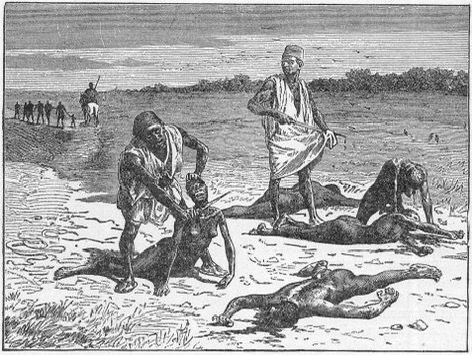
In the days of yore, when kingdoms were guarded by blood and Iron.Yorubaland knew how to answer a threat.
The Fulani expansion that consumed the 6th Aare Ona Kakanfo Afonja Alugbin Laya’loko at Ilorin did not stop there. It pressed eastward, toward the heart of the country.
(Check the history of the Yorubas by Samuel Johnson) .
But at Osogbo, around 1840,it met the Ibadan war machine. Headed by Balogun Odeyinka Oderinlo,at the invitation of the Ataoja , Oderinlo led a contingent that crushed the Fulani forces of Ilorin . His victory earned him the praise name “Omo a fi Fulani bo Osun” (He who uses the Fulani to sacrifice to the Osun river).
Oderinlo and allies did not negotiate with invasion.
They left no stone unturned. They planned with precision, fought with discipline, and chased the Fulani back. It was careful work. It was complete work. The land was defended, and a message was sent: Yorubaland would not be claimed by force.
The victory effectively stopped the southward expansion of the Sokoto Caliphate into Yorubaland.
(check Balogun Oderinlo in Yoruba history by Niyi Aborisade).
Ogbomoso understood the same duty. During the reign of Soun Jayeola Arolofin Baiyewuwon Kelebe, the town fortified itself with the erection of ‘ Ogun Ojalu’ .
(Check Iwe Itan Ogbomoso by Professor N D Oyerinde) .
‘Ogun Ojalu’ was no mere monument. It was a statement of readiness, a spiritual and military commitment that Ogbomoso would stand.
From Ibadan to Ogbomoso, our forefathers treated security as a sacred trust. They knew that land is not kept by prayers alone, but by preparation, unity, and the willingness to repel.
But the Fulani never relented in their pursuits to claim our land. When the battlefield closed, the contest moved. We switched to the era of politics when power left the monarchist and entered the parliament.
The methods changed,
The pressure did not.
What was once advanced by cavalry is now advanced by policy, by settlement patterns, by demographic leverage, and by the slow erosion of territorial control. The objective remains.
Today, the same towns that once held the line are being threatened. From the forests of Ibarapa to the highways of Oke Ogun, from farmlands in Ogbomoso to villages around Osogbo, fear has returned. Kidnapping, occupation of ungoverned spaces, and the displacement of farmers have become weekly news.
Our fathers would look at this and be sad. Not because enemies exist, but because we stopped answering them the way they did.
Things have changed in the modern times. The majority have embraced modern religion and modern ways. These brought schools, hospitals, and new ideas. But they also brought a new temperament. The communal war council has been replaced by denominational loyalties. The ethic of collective defense has been replaced by a focus on personal salvation and individual prosperity.
We are taught to forgive, to endure, to wait on divine intervention. We are taught to see every man as a brother, even when he arrives with a claim on your ancestral land. The shrines that once bound warriors to a common oath have been dismissed as primitive. The age-grade systems that mobilized every able body have been abandoned as outdated.
Our fathers repelled because they had one identity when it mattered: the land and the people. We now have many identities that compete: denomination, party, ethnicity within ethnicity. That fragmentation hinders us. It makes us slow to name a threat and slower to confront it.
Oderinlo did not write communiqués.Baiyewuwon did not wait for Abuja.
They acted because the institutions around them were built for action.
This is not nostalgia for war. It is a demand for clarity. If politics is the new battlefield, then we must fight it with the same unity and completeness our fathers took to Osogbo.
If modernity is our reality, then we must bend it to serve our survival, not surrender to it. State police, forest guards, local intelligence, and political will are the modern equivalents of Ogun Ojalu. They must be erected with the same seriousness.
The land does not keep itself. Ibadan proved it.Ogbomoso proved it once. The Fulani have not forgotten their pursuit.
The only question is whether we have forgotten how to answer.
Our forefathers are watching.
History is recording.
And the towns they saved are waiting.
Lanre Gbadamosi,a Public Affairs Analyst,Author and Editor writes from Ogbomoso
Well captured sir. Truly when will er take a stand against invasion in yoruba land