




No Camera, No Noise, Just Service: The Tawa Sharafadeen-Alli Philosophy
Timilehin Kolade
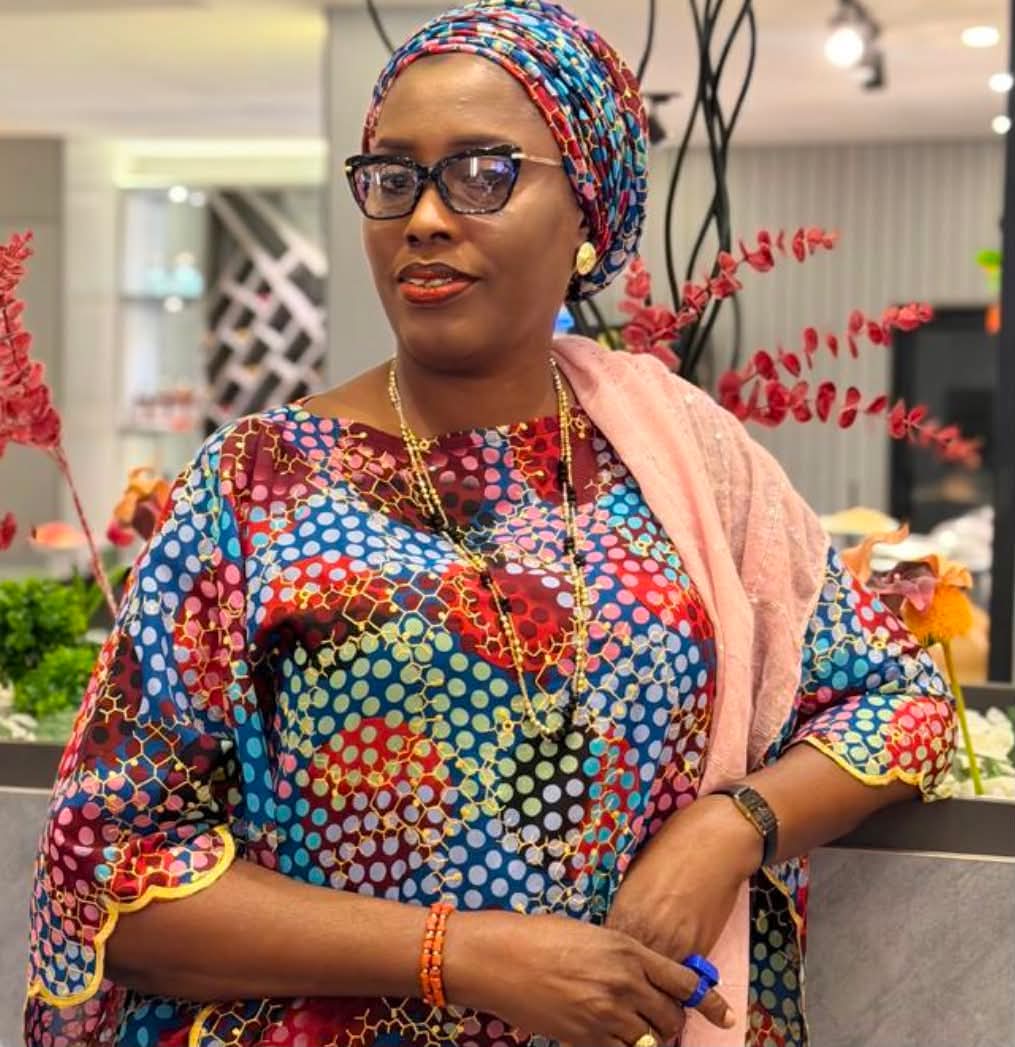
There are women whose presence commands attention without demanding it. Their elegance is natural, their confidence is quiet, and their warmth makes people feel acknowledged. Oloye Tawa Sharafadeen-Alli belongs to this category of women whose refinement is expressed not merely in appearance, but in character, carriage and conduct. An Ibadan high chief, an enterprising woman and a reported silent philanthropist, she represents an interesting intersection of culture, enterprise, femininity, empathy and humanitarian service.
There is, however, something particularly attractive about the way she appears to carry her many identities. She is a woman of social standing, yet her personality does not appear imprisoned by status. She is married to a politician, but she possesses an identity that extends beyond being a politician’s wife. She can occupy a public space with elegance while retaining the humility to engage with people whose circumstances offer neither glamour nor political advantage. She is graceful without being distant, confident without being overbearing, and accomplished without appearing consumed by the need for validation.
That, in many ways, is the beginning of the Tawa Sharafadeen-Alli philosophy.
It is the understanding that influence should have a human face. It is the belief that privilege should create an obligation to remember the vulnerable. It is the conviction that one can be visible without making visibility the purpose of service.
Her reported humanitarian engagements give substance to this philosophy. Visits to correctional facilities and homes for motherless children, alongside assistance to indigent people, point to a woman willing to engage with communities where compassion matters more than ceremony. What makes such interventions particularly meaningful is the reported absence of the constant camera. The beneficiary does not have to become content before becoming worthy of assistance.
No camera, no noise, just service.
In an era in which almost every public gesture can become a photograph, a video or a social-media announcement, there is something refreshing about humanitarianism that does not begin with publicity. Quiet service does not mean invisible service. Rather, it means that the person being helped remains more important than the person doing the helping.
This philosophy also provides an interesting lens through which to consider the institution of First Ladyship. Nigeria has witnessed women who recognised that proximity to political power could become a platform for social intervention. Maryam Babangida’s Better Life Programme for Rural Women brought women’s empowerment and rural development into national conversation. Aisha Buhari’s Future Assured initiative similarly focused on vulnerable groups, while Oluremi Tinubu’s Renewed Hope Initiative has undertaken interventions involving women, children, youths and families.
Michelle Obama offers a globally recognised example of purposeful First Ladyship. During her time in the White House, she used the visibility of the office to advance initiatives around healthy living, military families, education and girls’ empowerment. Her work demonstrated that the influence associated with First Ladyship can be directed towards causes beyond the ceremonial expectations of the position.
The lesson is not that every First Lady must copy another. It is that the office can become as meaningful as the woman chooses to make it.
For Oloye Tawa, the opportunity would naturally be shaped by her own temperament and strengths. Her reported empathy could translate into deeper humanitarian engagement. Her entrepreneurial disposition could encourage women’s economic empowerment. Her cultural standing as an Ibadan high chief could provide a bridge between tradition and contemporary community development. Her modesty could ensure that the office remains focused on impact rather than spectacle.
This is where her glowing qualities become politically and socially relevant without reducing them to politics. Elegance matters, but character gives elegance meaning. Enterprise matters, but compassion gives enterprise social purpose. Influence matters, but humility determines how that influence is exercised.
The contemporary African woman does not have to choose between being refined and being socially conscious. She can be cultured and entrepreneurial, sophisticated and compassionate, influential and humble. Oloye Tawa’s public persona appears to embody this convergence.
Perhaps that is the deeper meaning of the Tawa Sharafadeen-Alli philosophy: service without self-advertisement, influence without intimidation, refinement without pretension, and compassion without spectacle.
If First Ladyship is understood not merely as a ceremonial attachment to political office but as an opportunity for humanitarian engagement, social advocacy and community connection, then the character and philosophy of the woman occupying that space matter.
Oloye Tawa Sharafadeen-Alli offers an image of what that philosophy could look like: a woman who can glow without overwhelming the room, lead without making noise, and serve without demanding applause.
In the final analysis, the most beautiful form of public visibility may not be being seen everywhere. It may be being remembered by the people one quietly helped when nobody else was watching.
https://addlinks.pro/LNphi