


PRESIDENCY, DELUSION AND MAKINDE’S PIPEDREAM | By Timilehin Kolade
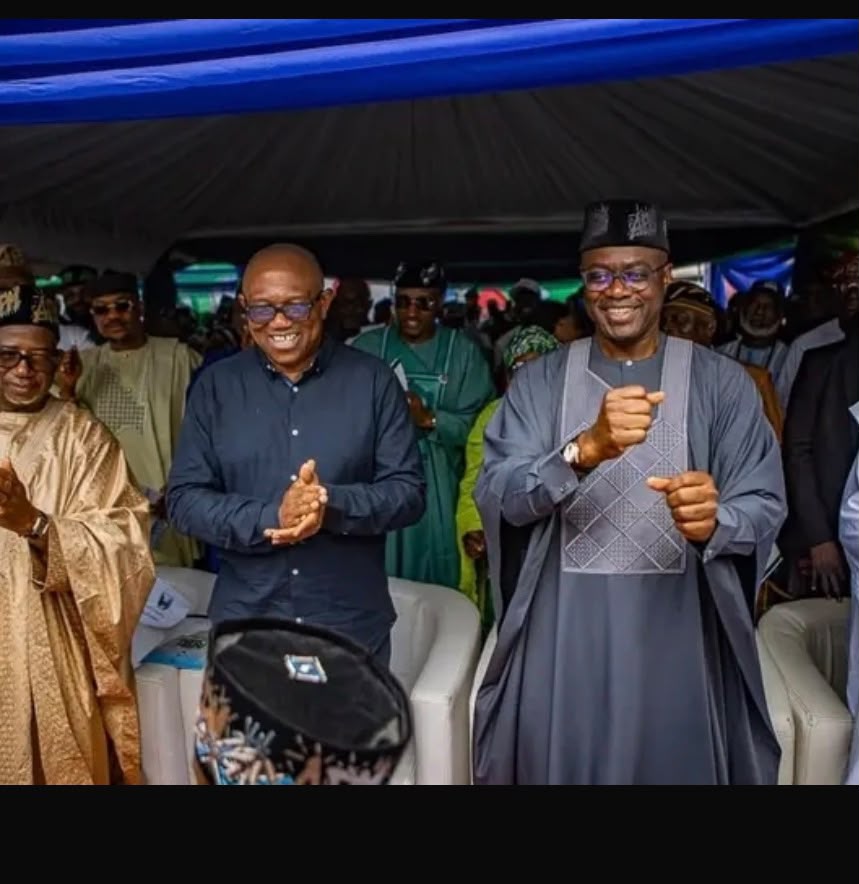
Governor Seyi Makinde’s presidential ambition raises a fundamental question that cannot be answered by political rhetoric alone: what exactly is the national value proposition of the administration he seeks to export to Nigeria? Ambition is legitimate in politics, but presidential aspiration should invite scrutiny of the political record behind it. Before Nigerians are asked to imagine Makinde at Aso Rock, they are entitled to interrogate the realities of governance in Oyo State.
The greatest contradiction in Makinde’s presidential project is the distance between the grandeur of his national ambition and the unresolved contradictions within his administration. Oyo State continues to confront serious challenges in education, healthcare, infrastructure, urban development and institutional capacity. The administration has produced visible projects and an impressive communication machinery, but governance cannot be measured exclusively by projects that photograph well or announcements that trend online. The deeper question is whether the state is developing institutions capable of sustaining prosperity beyond the personality and political influence of the incumbent.
Makinde’s government has also been criticised over its approach to public accountability and political inclusion. A government that aspires to national leadership must demonstrate an ability to accommodate dissent, manage political differences and build institutions that outlive partisan interests. Yet, the political atmosphere in Oyo has increasingly reflected the logic of political dominance, where the strength of the governing structure can overshadow the institutional independence necessary for a healthy democracy. Presidential ambition becomes problematic when political consolidation is mistaken for broad-based legitimacy.
There is also the unresolved question of Oyo’s development trajectory. Despite substantial public revenues and years of political stability, fundamental socioeconomic challenges remain. The expansion of the state’s physical infrastructure has not eliminated concerns about unemployment, youth economic insecurity, rural development, agricultural productivity and the uneven distribution of opportunities. A presidential aspirant must therefore explain not only what has been constructed but what structural transformation has occurred.
The temptation to project a successful gubernatorial narrative onto the national stage may ultimately become Makinde’s greatest political vulnerability. Nigeria is considerably more complex than Oyo State, and the problems of the federation cannot be solved through political branding or personality-driven governance. The presidency requires a national coalition, but it also requires a compelling record capable of surviving scrutiny beyond one’s political stronghold.
Makinde’s presidential ambition may therefore represent two parallel calculations: the pursuit of Aso Rock and the preservation of political relevance after leaving Agodi. The second may be more realistic than the first. His continued influence in Oyo State is politically consequential, particularly because the success or failure of his succession strategy will determine the durability of his political structure.
The presidency, however, cannot be treated as an insurance policy against political irrelevance. Makinde must first convince Nigerians that the contradictions confronting Oyo under his watch can be meaningfully addressed at the national level. Until then, the presidential project risks becoming an exercise in political overreach—a pipedream propelled more by ambition than by a demonstrable national mandate.